
Helping an Aging Loved One Through Declining Mental Health

Navigating an aging loved one’s declining mental health requires recognizing early warning signs, distinguishing normal aging from conditions like dementia or late-life depression, and introducing structured home-care routines. Proactive medical assessments, compassionate communication, and professional in-home support (such as memory care and respite assistance) help protect your loved one’s dignity, independence, and overall quality of life while preventing family caregiver burnout.
Watching a parent, spouse, or aging family member experience cognitive decline or emotional distress is one of the most challenging journeys a family can face. You may notice subtle shifts at first: missed appointments, uncharacteristic mood swings, neglected household tasks, or repetitive questions. Over time, these moments can evolve into profound changes that affect daily safety and emotional well-being.
Mental health in older adults is complex. It encompasses neurodegenerative conditions like Alzheimer’s disease, mood disorders like clinical depression, and acute issues like medication-induced delirium. Navigating this transition requires patience, evidence-based strategies, and a collaborative care approach.
This guide provides practical tools, communication techniques, and professional resources to help you support your aging loved one through cognitive and emotional decline with dignity and compassion.
Recognizing the Warning Signs: Normal Aging vs. Mental Health Decline
Forgetfulness is often dismissed as just “getting older.” While slight delays in word recall or occasionally misplacing car keys are typical age-related changes, persistent cognitive impairment and personality shifts are not.
According to the National Institute on Aging (NIA), dementia is the loss of cognitive functioning to such an extent that it interferes with daily living and basic autonomy. Recognizing the boundary between healthy aging and medical concern allows for early diagnosis and timely intervention.
| Area of Function | Typical Age-Related Change | Potential Sign of Mental Health Decline / Dementia |
| Memory & Recall | Forgetting an acquaintance’s name but remembering it later. | Asking the same question repeatedly; forgetting recent conversations or close family members. |
| Planning & Problem Solving | Making occasional errors when balancing a checkbook. | Inability to manage household bills, follow simple recipes, or track daily medications. |
| Mood & Personality | Developing specific routines and becoming irritable when interrupted. | Rapid mood swings, paranoia, unprovoked anger, persistent apathy, or intense anxiety. |
| Spatial & Temporal Awareness | Temporarily forgetting the day of the week, then recalling it. | Getting lost in familiar neighborhoods, wandering, or losing track of current seasons and years. |
| Self-Care & Hygiene | Occasionally wearing mismatched clothes. | Neglecting personal hygiene, refusing to bathe, or wearing unwashed clothes repeatedly. |
If you notice multiple signs from the right-hand column, schedule a comprehensive medical evaluation to identify underlying causes.
Common Mental Health and Cognitive Challenges in Older Adults
Mental health in seniors is not a one-size-fits-all issue. Proper care begins with understanding the specific condition your loved one may be experiencing:
1. Alzheimer’s Disease and Related Dementias
Alzheimer’s disease is the most prevalent form of progressive dementia, characterized by amyloid plaques and tau tangles in the brain. Reviewing the warning signs from the Alzheimer’s Association can help identify early indicators, including disorientation, language difficulties, and impaired judgment. Other forms include vascular dementia, Lewy body dementia, and frontotemporal dementia.
2. Late-Life Depression and Social Isolation
Depression is not an inevitable part of aging. According to data from the Centers for Disease Control and Prevention (CDC), depression in seniors is frequently co-morbid with chronic physical illnesses and severe loneliness. Older adults with depression may not openly express sadness; instead, they might display fatigue, sleep disturbances, appetite loss, and social withdrawal.
3. Chronic Anxiety and Paranoia
Anxiety disorders in seniors often center around fear of falling, losing independence, financial insecurity, or illness. In advanced cognitive decline, seniors may also develop paranoid delusions, such as believing someone is stealing from them when they misplace items.
4. Reversible Causes of Cognitive Decline
Not all cognitive decline is permanent. Medical conditions like urinary tract infections (UTIs), vitamin B12 deficiencies, thyroid imbalances, and adverse drug interactions can cause acute confusion (delirium) that mimics severe dementia. The Mayo Clinic emphasizes treating these underlying physical triggers before assuming a progressive neurodegenerative diagnosis.
How to Talk to Your Aging Loved One About Cognitive Changes
Bringing up mental health or memory concerns can trigger defensive reactions, fear, and grief. Approaching the conversation with tact and empathy makes all the difference:
Choose the Right Setting: Pick a quiet, familiar environment during a time of day when your loved one is well-rested and calm.
Use “I” Statements: Instead of saying “You are forgetting everything,” frame the conversation around your care: “I’ve noticed you seemed stressed managing the mail lately, and I’d love to help take that burden off your shoulders.”
Focus on a Doctor’s Checkup, Not a “Test”: Frame medical visits around baseline health checks rather than memory testing. As highlighted by the National Council on Aging (NCOA), early detection empowers individuals to participate actively in their own legal, financial, and healthcare planning.
Listen Without Correcting: If they repeat stories or misremember minor facts during casual conversation, avoid arguing. Validate their feelings rather than debating reality.
Actionable Strategies to Support Mental Well-Being at Home
Creating a structured, supportive home environment can reduce anxiety, maintain cognitive engagement, and improve overall safety.
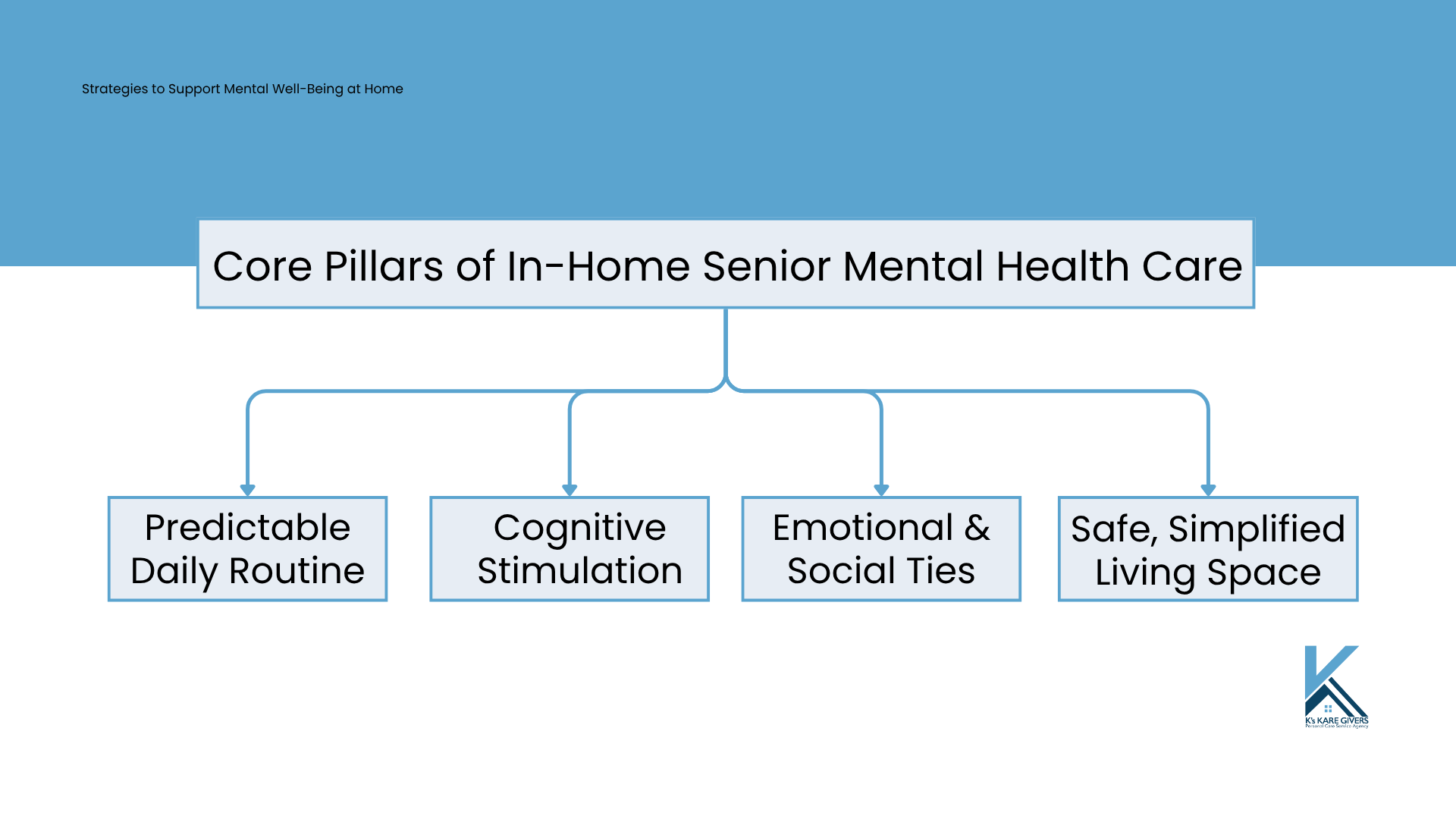
- Establish Predictable Daily Routines: Keep consistent times for waking, meals, medication, exercise, and bedtime. Predictability reduces cognitive fatigue and sundowning symptoms.
- Promote Meaningful Cognitive Stimulation: Simple brain exercises, such as listening to favorite nostalgic music, working on large-piece jigsaw puzzles, gardening, or sorting family photographs, activate memory pathways without inducing stress.
- Encourage Physical Movement and Nutrition: The World Health Organization (WHO) emphasizes that balanced nutrition, hydration, and regular physical activity support brain plasticity and emotional health in aging populations.
- Modify the Living Environment for Safety: Clear clutter, install grab bars in bathrooms, improve indoor lighting, and remove tripping hazards like loose rugs to prevent falls and reduce visual confusion.
When to Seek Professional In-Home Caregiving Support
Caring for an aging parent or loved one with declining mental health can be emotionally and physically exhausting. Family caregivers often experience severe stress, sleep deprivation, and burnout. Seeking professional support is an essential step in maintaining high standards of care for your loved one.
Professional home care agencies provide tailored, non-medical support that allows seniors to stay comfortably and safely in their own homes:
KS Karegivers Dementia & Alzheimer’s Care: Specialized memory care that uses validation therapy, gentle redirecting, and structured routines to manage cognitive decline safely.
KS Karegivers Companion Care: Meaningful companionship that fights social isolation, encourages hobby engagement, and provides meal preparation and light housekeeping.
KS Karegivers Personal Care Services: Respectful assistance with activities of daily living (ADLs), including bathing, grooming, dressing, and mobility support.
KS Karegivers Respite Care Services: Short-term relief for family caregivers, allowing you time to rest, work, and recharge knowing your loved one is in capable hands.
Resources from organizations like the Family Caregiver Alliance remind us that caregiving is unsustainable without a reliable support team. Bringing in trained professionals enhances your loved one’s care while preserving your relationship as a son, daughter, or spouse.
Frequently Asked Questions (FAQs)
How do I know if my aging parent is depressed or in the early stages of dementia?
While both conditions cause memory lapses and apathy, depression typically develops more rapidly, and individuals often express distress over their memory lapses. With dementia, individuals are frequently unaware of their cognitive decline. A comprehensive geriatric psychiatric assessment is necessary for an accurate diagnosis.
What should I do if my loved one refuses to see a doctor or accept help?
Avoid confrontations. Instead, tie the doctor’s visit to a routine checkup, medication refill, or physical wellness exam. Enlist the help of a trusted third party, such as their primary care physician, a close friend, or a spiritual advisor, to encourage support.
Can cognitive decline in seniors be reversed?
If the cognitive symptoms are caused by a metabolic issue, vitamin deficiency, infection (like a UTI), or medication interaction, treating the root medical issue can fully reverse symptoms. For progressive dementias like Alzheimer’s, treatments and structured home care focus on slowing symptom progression and improving quality of life.
How does in-home care help seniors with mental health decline?
In-home caregivers provide consistent routines, social stimulation, medication reminders, and safety monitoring in a familiar home environment, reducing the disorientation and distress often triggered by facility relocations.
Give Your Loved One the Compassionate Support They Deserve
You don’t have to navigate your loved one’s cognitive and emotional journey alone. Professional, compassionate guidance can bring peace of mind to your entire family while ensuring your aging parent receives personalized, respectful daily care.
Call KS Karegivers today to speak with a care coordinator, schedule a free in-home assessment, and learn how our dedicated caregivers can support your family’s needs.
Table of Contents
- Recognizing the Warning Signs: Normal Aging vs. Mental Health Decline
- Common Mental Health and Cognitive Challenges in Older Adults
- 1. Alzheimer’s Disease and Related Dementias
- 2. Late-Life Depression and Social Isolation
- 3. Chronic Anxiety and Paranoia
- 4. Reversible Causes of Cognitive Decline
- How to Talk to Your Aging Loved One About Cognitive Changes
- Actionable Strategies to Support Mental Well-Being at Home
- When to Seek Professional In-Home Caregiving Support
- Frequently Asked Questions (FAQs)
- How do I know if my aging parent is depressed or in the early stages of dementia?
- What should I do if my loved one refuses to see a doctor or accept help?
- Can cognitive decline in seniors be reversed?
- How does in-home care help seniors with mental health decline?
- Give Your Loved One the Compassionate Support They Deserve
Get our latest guides straight to your inbox.
Need Professional Care?
Our compassionate caregivers are ready to help your loved ones thrive.
Find A ServiceRelated Posts

In-Home Peripheral Neuropathy Care for Seniors in Las Vegas, Nevada
September 14, 2026
In-Home Care Support for Congestive Heart Failure in Las Vegas, Nevada
September 14, 2026
Managing Severe Arthritis at Home in Clark County, Nevada
September 14, 2026
Living with COPD in Las Vegas: Senior Home Care & Air Tips
September 14, 2026
In-Home Diabetes Management for Seniors in Las Vegas, Nevada
September 14, 2026